• 1
  • 2
  • Ikhwezi Partners

    We at Ikhwezi Partners are focused on identifying suitable business opportunities in alliance with strategic partners, in order to facilitate the transfer of skills and technology and thereby promote the growth of the South African economy.

    Read More

  • Foxtec-Ikhwezi

    Foxtec-Ikhwezi manufactures and supplies high volume forged aluminium products with an extremely high degree of process capability, precision and quality.

    Read More

  • Vibracoustic Ikhwezi

    Vibracoustic is the world’s leading supplier of Anti-Vibration Solutions for the automotive industry.

    Read More

  • 1
  • 2
  • 3

Autonomous driving brings new challenges to driving comfort

Autonomous driving is one of the biggest trend topics in the automotive industry and has the potential to revolutionize driving in the upcoming years. Aim is to make the flow of traffic safer and more efficient and to protect the environment. Whether autonomous driving will actually be suitable for mass use in the future remains to be seen; drivers and passengers will then have time for other things during the journey and the requirements for driving comfort and the perception of the driving experience will thus change significantly. This poses challenges not only for manufacturers, but also for suppliers. Vibration control technology can make an important contribution here.

Q: Autonomous driving is to become an integral part of our everyday lives in the future. The road to mass suitability is still a long one, as the necessary technologies are highly complex and the current field trials of some manufacturers are still at the very beginning. What challenges do you see for the automotive industry?
A: Autonomous driving is indeed highly complex, and its successful implementation is influenced by many factors. A special challenge arises as it is a completely new topic for the industry. There is no history or data that manufacturers and suppliers can rely on when developing products and technologies. There is a lack of experience on how autonomous driving will affect the driving experience and perception in the medium and long term. But that is exactly what makes the subject so interesting and awakens our passion for engineering: We work closely with our customers worldwide to find solutions to current and future mobility challenges in our fast-paced industry. Our comprehensive expertise, product portfolio and understanding of the entire vehicle system form the basis; in combination with extensive testing procedures and simulations as well as the development of suitable materials and prototypes, scenarios for autonomous driving and their influence on the driving experience can be simulated very realistically. One thing is certain: if drivers and passengers no longer must concentrate on traffic, they will use the time while driving in a different way, for example enjoying the in-car entertainment system, reading the newspaper or work. This is one of the big challenges for us as a provider of NVH solutions, because time can only be used comfortably if you don't have to fight against discomfort or are distracted or disturbed by vibrations and noise. No matter how connected the systems are, however sophisticated the safety technology, autonomous driving will only be accepted if the passengers feel comfortable and safe during the journey. Here, vibration control technology can make a decisive contribution.

Q: To what extent does vibration control technology play a role in this area, which is mainly characterized by computer-controlled technologies?
A: In principle, vibration control technology contributes to the successful implementation of trends such as autonomous driving – it is crucial for driving comfort. Because driving comfort does not just start with the equipment or the interior of a vehicle, but already with the chassis. The engine and road unevenness generate noise and vibrations that have a noticeable effect on comfort on board. Solutions such as mounts, springs, dampers or absorbers – and air springs – can help. Now, the chassis tuning focuses on the driver. It defines the dynamic characteristics and the decisive driving experience. But as soon as the vehicle drives autonomously, this coordination must change completely and place passive passengers at the center of attention. This is a necessary paradigm shift, so that autonomous driving is perceived as pleasant at all. Switchable air spring systems can help here: Firstly, the air spring keeps the vehicle at a constant level – no matter how heavy it is loaded. On the other hand, the driver can adjust his chassis individually and, for example, choose between a tight sports chassis and a comfortable set-up. Thanks to intelligent switching, we can even offer up to four different degrees of hardness. Especially in the transition period from semi-autonomous to fully autonomous, the driver can thus focus on himself or the passengers and influence driving comfort accordingly.

Q: An important factor in autonomous driving will also be in-car entertainment. Here, vibrations and noise play a decisive role in the user experience, too. What solutions does vibration control technology offer here?
A: More and more vehicles are equipped with entertainment systems for the passengers in the back seat. But the quality of the film or gaming experience depends not only on the content, but also on the vibrations of the vehicle. Movements are transferred to the front seat and thus also to the devices themselves, since these are usually integrated in the seat or the headrest. The result is visible vibrations and thus a limited entertainment experience. This can lead to discomfort or even nausea for the passengers in the back seat. Customized, modular seat dampers with rubber elements provide a remedy. These are specially adapted to the seat and installed in the rear seat back. The vibrations of the seat, especially when no one is sitting on it, are thus reduced significantly.

Q: Voice control is a trend that will certainly become even more important in autonomous driving to make the driving experience even easier and more comfortable.
A: That is also our assumption. More and more voice control features are already finding their way into the vehicles. Using voice commands, you can read and write messages, operate your navigation system, answer or make calls, call up your favorite song and play it at the desired volume – all this will be part of everyday life in the future. However, vibration control technology is necessary to ensure that the integrated microphones required for this can always understand the user reliably. It isolates and dampens disturbing noises and vibrations caused by the drive or road unevenness. Engine mounts, for example, isolate the vibrations that occur when the vehicle starts and prevent or reduce booming noises and load change shocks while driving. Undesired vibrations and excitations from the drive do not even reach the driver or the microphones.

Autonomous driving and vibration control technology go hand in hand in several areas. We are ready for tomorrow's mobility and NVH challenges. Driving comfort will play a decisive role in the development.


Published 17.09.2018Q&A with Dr. Jörg Böcking, CTO, Vibracoustic
Click here to see original article.

Lightweight engine mount: less weight, maximum performance and comfort

Considering ever stricter emission standards as well as trends like electrification of the drivetrain, reducing the overall weight of vehicles becomes an essential challenge for the automotive industry. To face this challenge, Vibracoustic offers a lightweight solution for engine mounts, using a thermoplastic housing instead of a die-cast housing. Compared to a conventional steel application, the component is 40% lighter but still provides the same level of performance and driving comfort.
Traditional engine mounts consist of an engine support arm which transfers the power from the engine to an isolation element made of rubber and a body-side mount. Vibracoustic replaces the steel housing of the damping element by improved glass-fiber-reinforced thermoplastic. Using the so-called Rubover technology, the thermoplastic is injected directly onto a previously vulcanized elastomer component. This ensures a firm bond without further assembly. Compared to a steel housing, the weight can be reduced by 40%.

While reducing the weight significantly, the lightweight engine mount is still meeting all requirements relating to temperature and mechanical stress associated with use in the engine compartment and is applicable for mass production. In contrast to traditional homogeneous materials such as steel or aluminium, with fiber-reinforced plastic, the quantity, distribution and orientation of the fibers have a significant effect on design, strength, and ultimately also on the cost of the product. With its comprehensive production experience, Vibracoustic can actively influence performance criteria’s already in the simulation and design phase and can anticipate behaviour at component level.

Engine mounts carry out their job over the entire lifetime of a vehicle. While stationary, they bear the static weight of the engine. On start-up, the mounts reduce the noise of the combustion engine, isolate low-frequency vibrations and support the drive torques. During driving, the mounts dampen vibrations caused by uneven road conditions. During braking and cornering, they ensure that the dead weight of the engine does not impact driving dynamics. Even in the event of a crash, the mounts must keep the engine stable in position.

With a unique portfolio of engine mounts, Vibracoustic has the right solution for every engine-specific requirement. This ranges from conventional rubber mounts and hydraulic engine mounts to switchable engine mounts. With 50 million engine mounts produced each year, Vibracoustic is the global market leader and ensures that unwanted noises and vibrations from the powertrain do not reach the passengers.


Published 10.09.2018
Click here to read original article.

Otto Fuchs Sustainability Report

csm Nachhaltigkeitsbericht OTTOFUCHS b60f951edfAs a family business, OTTO FUCHS has been in line with the principle of sustainable management for over a century, in harmony with the environment, employees and our social environment.

In this first report, OTTO FUCHS provides insights into the management systems, key metrics, and a selection of global and local initiatives.

The report is published every two years and is available for download on the OTTO FUCHS website at www.otto-fuchs.com/sustainability . Upon request, he will also be sent to interested parties as a print medium.


Published 03/29/2018
Click here to read original article.

IAA Commercial Vehicles: Driving Comfort is an Evergreen

In September, the commercial vehicle sector looks to Hanover for the IAA Commercial Vehicles, the world's leading trade fair for transport, logistics and mobility. This year's trade fair will focus on future issues and trends such as automation and the connectivity, safety, environmental protection, e-mobility and new concepts for logistics and transport in the city of the future.

vibracoustictruckbackground

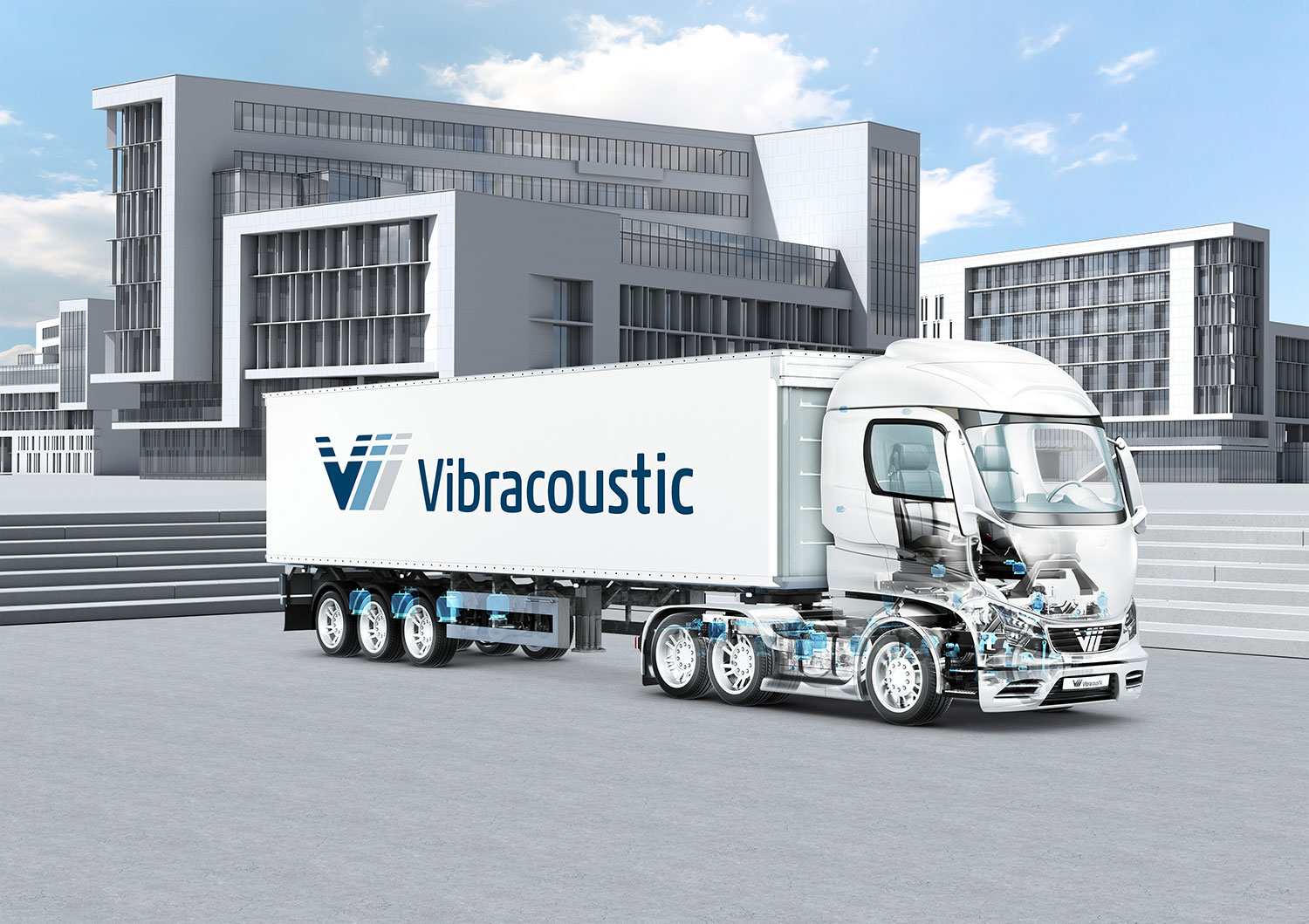
In addition to these trends, comfort for the driver and the durability of the vehicles also play a decisive role in the industry. The annual mileage of a truck in long-distance traffic is up to 150,000 kilometers. A truck driver therefore sits at the wheel about ten times longer on average than a driver of a passenger car – particularly difficult road conditions such as damage or unevenness have a negative effect on the driver's health and thus on driving safety. Modern vibration control technology can make an important contribution here and ensure maximum comfort by comfortably supporting and absorbing the driver cab.

The possibilities for implementation here are manifold and range from chassis mounts to air springs and cab mounts. Air springs, for example, help to compensate for load fluctuations in the vehicle: Commercial vehicles are equipped with a complex spring system because the rear axles in particular are exposed to strong load fluctuations. When operating without a trailer, the axles only have to carry the tractor's own weight. In a fully loaded semitrailer truck, on the other hand, the two rear axles are subjected to loads of more than ten tons each. Air springs are the optimum combination of safety, comfort and cost efficiency, especially on the rear axles. Thanks to the constant height of the tractor unit and trailer, the driving characteristics are good under any load condition. Moreover, the spring system cannot break through – chassis and load are spared. The principle is similar to that of a passenger car: pressure on the piston compresses the enclosed air volume. When the piston is relieved again, the pressure drops. Adaptive dampers can be used to further optimize driving behavior.

The pressure-tight connection to the other components of the air spring is realized via tension beads located at the ends of the bellows. In the form of cabin air springs – they are used in the driver cab suspension – they serve to comfortably support the driver cab. They have a low, uniform natural frequency and keep the vehicle at a constant level. This significantly reduces vibrations caused by a wide variety of road surfaces or load fluctuations, which are transmitted to the driver cab via the chassis. Cab air springs offer a perfect balance between driving comfort and dynamics. In addition, the increased comfort for the driver supports the safe driving of the vehicle.

Cab mounts also make a significant contribution to increased driving comfort: they dampen annoying vibrations and noises and thus provide good working conditions for the driver. The suspension varies from vehicle to vehicle and is usually provided by bushings, air springs or steel springs – they are often used in combination. Since a driver cab weighs between 600 and 1,900 kilograms, depending on its design, the demands placed on the cab mounts are very high. The developers at Vibracoustic therefore calculate the elastomers and metal parts of the components using modern finite element methods. To save valuable development time for vehicle manufacturers, the mounts are then tested on the test bench. The result of this work is long-life cab mounts that meet high demands in terms of comfort and functionality.


26.09.2018 by Thomas Engel, Global Account Management Commercial Vehicle at Vibracoustic
Click here to read original article.

Otto Fuchs is once again awarded the Seal of Research

Forschung und Entwicklung 2018 printFor the second time in succession, OTTO FUCHS has been awarded the "Innovative through Research" seal of approval for its special commitment to research and development

According to the Stifterverband, there are 3.5 million companies in Germany, with only one percent participating in these companies actively involved in research, says OTTO FUCHS, and only with the help of future-oriented research can OTTO FUCHS develop new skills, gain experience, expand its core competencies and underpin its leading position in the market.

The Stifterverband is one of the largest private science sponsors in Germany. He is committed to young academics, excellent universities and cutting-edge research. In addition, the association has set itself the task of investigating and evaluating the German research and innovation system.


Published 05/30/2018, click here to see original article.

Contact Ikhwezi Partners

Contact our office on +27 (0)43 701 8000. or alternatively email us below.

Please, enter your name
Please, enter your phone number
Please, enter your e-mail address Mail address is not not valid
Please, enter your message

Our Links

The Paralian
The Paralain is a four star guest house located on the Esplanade in East London.

The Hampton
The Hampton is exclusive executive guest house located on the Esplanade in East London.

Otto Fuchs
International partner of Foxtec-Ikhwezi